

Strength Training for Women Over 60: Why I Started at 67
Strength training for women over 60 can feel intimidating at first, especially if you’ve spent years putting your health on the back burner. In this video, I’m sharing why so many women over 55 resist exercise, what is really happening biologically and emotionally, and how you can finally break through that resistance. I also share the simple arm exercises I use at 76 to stay strong and sculpted. If you’ve ever thought it was too late to begin, I hope this encourages you to think again.
DISCLAIMER: This post may contain affiliate links in which case I will make a small commission if you purchase using these links … which is a way to support my channel. If you prefer, you can choose to search for the items on your own and not use these links. Either way, thank you so much for viewing my video. I am thrilled to have you be part of my community.
Why Strength Training for Women Over 60 Feels So Hard to Start
Many women over 55 know exactly what they should be doing to improve their health. We know that exercise helps protect our joints, strengthen our muscles, and even improve our brain health. At the same time, we see people who exercise regularly and admire their energy and confidence.
Yet despite knowing all of this, many of us still resist starting.
It’s easy to assume the reason is laziness or lack of motivation. However, the truth is much more complex. Resistance to change is not simply a matter of willpower. Instead, it is often the result of several powerful forces working together—biology, psychology, emotional memory, and identity.
Once you understand these forces, it becomes much easier to break through them.
The Biological Reason Change Feels Difficult
One of the most powerful reasons we resist exercise is simple biology.
Our bodies are wired to conserve energy. For example, from a survival perspective, the brain prefers familiar patterns and minimal effort. This principle is often described through Newton’s first law of motion: an object at rest stays at rest, and an object in motion stays in motion.
The same concept applies to human behavior.
Starting a new habit requires energy, effort, and movement outside of your comfort zone. Because of this, your nervous system naturally resists that shift at first. This means resistance to exercise is not a personal failure. Rather, it is simply how our biology works.
The key is to begin with very small actions that break inertia. Even a few minutes of movement can begin creating momentum.
Why Your Brain Interprets Exercise as a Threat
Psychology also plays a powerful role in resistance.
Your brain’s primary job is not fitness. Instead, its primary job is safety. When you begin resistance training, your brain may interpret unfamiliar sensations—muscle fatigue, elevated heart rate, or strain—as potential danger.
This response comes from the brain’s threat detection system, known as the amygdala. As a result, it may trigger hesitation, procrastination, or avoidance.
That reaction doesn’t mean something is wrong. In reality, it simply means your brain is trying to protect you.
Over time, however, as your brain learns that exercise is safe, that fear response gradually fades.
How Emotional Experiences Shape Our Habits
Many women also carry emotional memories related to exercise.
Perhaps you felt intimidated in a gym environment. Or, you may remember being the slowest person in a fitness class or comparing yourself to younger bodies. These emotional experiences can become deeply stored in the nervous system.
When the brain associates exercise with embarrassment or discomfort, it naturally tries to avoid repeating that experience.
For this reason, training privately at home can be a powerful solution. Removing comparison and pressure allows you to rebuild confidence at your own pace.
The Identity Shift That Changes Everything
Another important factor is identity.
For decades, many women prioritize their careers, families, and responsibilities. As a result, taking time for our own health can begin to feel selfish.
Strength training requires time, attention, and self-focus. Therefore, if your identity has not yet shifted to someone who prioritizes her strength and wellbeing, your subconscious mind may continue resisting it.
But once that identity begins to change—once you start thinking of yourself as a strong and capable woman—consistency becomes easier.
You are no longer trying to exercise. Instead, you are becoming someone who values strength.
Why Tracking Progress Rewires Your Brain
Another powerful factor in building consistent habits is dopamine.
Our brains are wired to seek rewards. For example, scrolling social media, eating sugar, or checking notifications can provide quick dopamine hits.
Strength training works differently. Instead, the rewards come later.
The benefits are real: stronger muscles, better bone density, increased longevity, and greater confidence. However, these rewards take time to appear.
This is why tracking progress can make such a difference.
When we check off completed routines, log workouts, or track streaks, our brain releases dopamine. As a result, we become more motivated to repeat the behavior again.
This principle is exactly why I created the New Age Beauty Goal Tracker.
The tracker helps you build simple routines, track small daily actions, and see visible progress over time. Instead of asking yourself every day whether you feel like exercising, your plan is already in place. You simply open the tracker, see what is scheduled for the day, and check it off when it’s complete.
Those small check marks may seem simple, but they are incredibly powerful. Over time, they reinforce motivation, build consistency, and gradually help transform resistance into repetition.
The Arm Exercises I Use at 76 to Stay Strong
Later in the video, I demonstrate three arm exercises that have helped me build strength and definition, even though I didn’t begin serious training until my late 60s.
These exercises include:
• Three-stage bicep curls
• Overhead tricep extensions
• Hammer curl presses
Each movement should be performed slowly and with control. At first, starting with light weights is essential.
As you get stronger, the weight and number of repetitions can gradually increase.
The goal is not intensity at the beginning. Instead, the goal is consistency and proper form.
It’s Never Too Late to Get Stronger
If I could begin strength training in my late 60s and build real muscle and strength in my 70s, then it truly is possible at any age.
Understanding why we resist change removes the shame many people feel when starting something new. Instead, we can focus on building small, consistent habits.
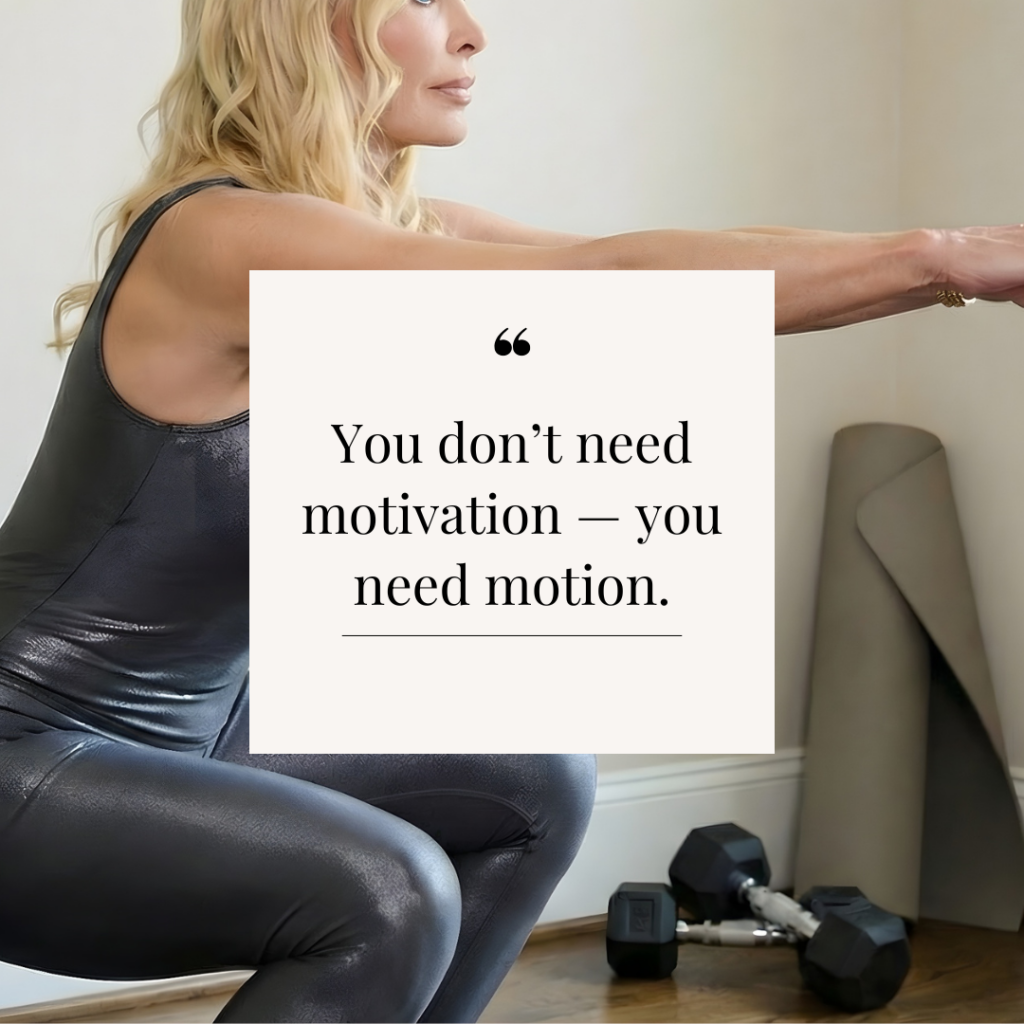
Motion creates momentum. Momentum builds confidence. And ultimately, confidence allows us to pursue bold goals.
Aging powerfully is not about shrinking as the years pass. Rather, it is about growing bolder, stronger, and more capable with time.
Final Thoughts
If you found this article featuring Strength Training for Women Over 60 helpful, I invite you to visit my New Age Beauty YouTube channel, where I share videos about healthy aging, strength, beauty, and living boldly at every stage of life.
Be sure to subscribe so you never miss a new video. And if you want help building consistent habits, don’t forget to explore the New Age Beauty Goal Tracker on my website. It’s a simple tool designed to help you track small daily actions, build momentum, and stay focused on the bold goals that matter most to you.
Thank you for being here, and I look forward to seeing you in the next video.